If you thought the security architecture of Eastern Europe was set in stone, the Pentagon just threw a massive wrench into that assumption. Warsaw spent the last week in a state of absolute disbelief. The shockwave hit when news broke that 4,000 U.S. troops from the Army's 2nd Armored Brigade Combat Team, 1st Cavalry Division, suddenly had their scheduled deployment to Poland canceled.
For a country sharing a massive border with war-torn Ukraine, a sudden drop in American boots on the ground feels less like a logistical shift and more like a betrayal.
The Pentagon scrambled to fix the public relations nightmare. Chief Pentagon spokesperson Sean Parnell quickly stepped up to call the move a "temporary delay," reassuring everyone that Poland remains a "model U.S. ally." Vice President JD Vance jumped in too, claiming it isn't a real reduction but just a standard delay in rotation.
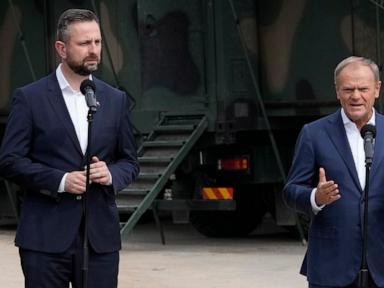
Warsaw breathed a public sigh of relief. Polish Prime Minister Donald Tusk noted he was happy Washington is treating Poland as it deserves, while Defense Minister Władysław Kosiniak-Kamysz confirmed the U.S. presence is being maintained.
But let's look past the diplomatic spin. This isn't just a simple scheduling glitch. It's a flashing red warning light for the entire European continent.
The Reality Behind the Pentagon Logistical Shuffle
The official story from Washington is pure bureaucracy. The Trump administration is reducing the number of U.S. Brigade Combat Teams assigned to Europe from four down to three. This effectively resets American troop levels on the continent back to pre-2022 numbers, undoing the emergency build-up triggered by Russia's invasion of Ukraine.
When you cut a whole brigade from the theater, you run out of pieces on the chessboard. The Pentagon now has to figure out how to stretch fewer troops across the same volatile eastern flank.
The execution of this decision was messy, to say the least. Bipartisan critics in Congress are furious. Representative Don Bacon stated that Polish officials were completely blindsided by the announcement. Inside the military, the confusion was just as bad. Some American troops were literally told not to board their flights to Europe at the very last minute, while the heavy equipment they were supposed to operate was already sitting in European ports.
This frantic scrambling highlights a deeper friction between the White House's political directives and the military reality on the ground. Washington wants a smaller European footprint, and it wants it now.
Why Poland Expected Better Treatment
You can understand why the Polish government felt insulted by the sudden cancellation. Poland isn't a NATO freeloader. It leads the entire alliance in defense spending relative to its economy, pumping a massive 4.7% of its GDP into military modernization.
Warsaw pays roughly $15,000 annually per U.S. soldier stationed on its soil to support their presence. They have bought American tanks, Patriot missile systems, and F-35 fighter jets. They did everything Washington asked of its allies.
Right now, about 10,000 American troops are stationed in Poland, mostly on a rotating basis. Polish defense officials have long pushed to turn this temporary setup into a permanent American base. Defense Minister Kosiniak-Kamysz even tried to spin the current crisis, suggesting that a chaotic rotational model might finally force the U.S. to transition into a stable, permanent presence.
That feels like wishful thinking. The broader trend points in the exact opposite direction.
The Transatlantic Shift is Real and Permanent
While Polish leaders are comforting themselves with Washington's latest clarifications, Donald Tusk dropped a heavy dose of realism on his European colleagues. He warned that Europe should be under no illusion about Washington's long-term determination to scale back its military footprint on the continent.
NATO Secretary-General Mark Rutte echoed this sentiment, pointing out that allies have known for a year that the Trump administration plans to draw down forces. The U.S. is pulling at least 5,000 troops out of Germany too. The message from the White House is unmistakable: Europe must take primary responsibility for its own conventional defense.
The American focus is shifting. Washington sees China as its primary long-term competitor and wants to pivot resources to the Indo-Pacific. The luxury of relying on uncle Sam to handle regional European security is coming to an end.
What Europe Needs to Do Right Now
The chaotic handling of this deployment shows that waiting around for Washington to clarify its plans is a losing strategy. European nations, especially those on the frontline, need to act immediately to fill the emerging security vacuum.
- Accelerate Domestic Defense Production: European armies cannot rely on American supply chains that can be choked by political shifts in Washington. Continental defense manufacturing must scale up to produce artillery, ammunition, and air defense systems independently.
- Build Direct Regional Coalitions: If the overarching NATO umbrella feels shaky due to shifting American priorities, regional alliances become vital. Poland, the Baltic states, and the Nordic nations must deepen their operational integration to create a seamless frontline defense.
- Pledge Hard Spending Commitments: Western European nations that have lagged behind the 2% NATO defense spending target must match Poland's urgency. Security isn't free, and the American taxpayer is no longer willing to foot the bill for wealthy European democracies.
The temporary delay in Poland will likely get sorted out in the coming weeks, and those 4,000 troops might eventually show up. But the illusion of an permanent, unquestioned American security blanket has been shattered. Europe has been warned.
U.S. cuts troops in Europe to pre‑2022 levels
This news report provides a breakdown of the Pentagon's decision to reduce Brigade Combat Teams in Europe, offering critical regional context on how these troop shifts are impacting Poland and the wider NATO alliance.