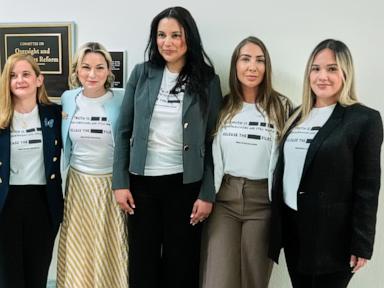
The federal investigation into Jeffrey Epstein’s sprawling sex trafficking network was supposed to end with radical transparency under the Epstein Files Transparency Act. Instead, it has collapsed into a bureaucratic and political crisis that has revictimized the very women the state promised to protect. The Department of Justice's recent, chaotic release of thousands of unredacted case files did not expose the powerful financiers, politicians, or executives who frequented Epstein's properties. It exposed the survivors. Nude photographs, deeply personal psychological histories, and unredacted names of Jane Does were flung into the public domain, while the identities of the wealthy men who funded the operation remained securely hidden behind thick black lines of government censorship.
This is not a failure of oversight. It is a systematic demonstration of how institutional self-preservation works in Washington. When Capitol Hill turns its gears to investigate the rich and powerful, the machinery almost always jams at the exact point where transparency threatens the status quo.
The immediate fallout landed on the House Oversight and Accountability Committee, where lawmakers attempted to trace how a transparency mandate mutated into a privacy disaster. Former Attorney General Pam Bondi sat for a tense, closed-door deposition to answer for the Department of Justice's handling of the file release. She did not provide the breakthrough lawmakers wanted. Accompanied by federal attorneys, Bondi spent hours deflecting specific inquiries about executive branch interference, pointing instead to her former deputy, current Acting Attorney General Todd Blanche, as the official who managed the actual mechanics of the publication.
The finger-pointing inside the committee room highlighted a broader, structural avoidance of responsibility. While officials debate the chain of command, the women who survived Epstein's operation are left to manage the wreckage of a weaponized disclosure.
The defense offered by the justice system is that the sheer volume of the archive made technical errors inevitable. Redacting millions of pages of complex investigative material is an administrative nightmare. But that explanation fails to account for the selective nature of the caution displayed in these documents. Federal censors managed to meticulously scrub details that could definitively link specific elite figures to explicit criminal acts, yet they somehow overlooked the basic identity markers of teenage victims who came forward to the FBI as far back as 1996.
This asymmetry is the core mechanism of the crisis. The state has treated the archive not as a roadmap for prosecution, but as a hazardous waste site that needs to be contained.
The Illusion of Bipartisan Momentum
On the surface, the legislative push to unearth the truth about Epstein’s network looks like a rare moment of congressional unity. Representatives from opposite ends of the political spectrum have stood side by side on the Capitol lawn demanding a full, unredacted accounting of the files. This public display of solidarity suggests an institution finally willing to cross partisan lines to confront systemic child exploitation.
The unity vanishes the moment the investigation moves from rhetoric to enforcement.
A congressional committee has immense power to issue subpoenas, but it possesses almost no capacity to enforce them against an executive branch determined to slow-walk compliance. The first tranche of documents delivered to the House Oversight Committee consisted mostly of publicly available court filings and duplicated administrative records. It contained nothing new. The real investigative files—the raw FBI interviews, the internal memos explaining the notorious 2008 non-prosecution agreement, and the financial intelligence reports tracking the movement of offshore funds—remain locked away.
The public calls for transparency serve a dual purpose in Washington. For some lawmakers, they are a genuine attempt to force institutional accountability. For others, they are an effective tool for political theater, used to imply that political rivals are hidden in the unreleased pages without ever having to prove it.
The executive branch has weaponized this political friction. By framing the ongoing congressional scrutiny as a partisan obsession or an endless distraction, the administration creates a shield for the intelligence and law enforcement agencies that failed to stop Epstein for decades. The narrative becomes a debate about political motives rather than a clinical examination of institutional complicity. Meanwhile, the Department of Justice continues to lean on the defense that active, unspecified investigations prevent them from making a full disclosure. It is an argument that can be maintained indefinitely.
The Survivor List vs. The State Archive
Frustrated by the government’s failure to deliver clarity, some survivors have discussed an alternative: compiling their own records. This quiet initiative reflects a complete breakdown of trust in the federal apparatus. If the state will not verify the network of facilitators and participants, the women who were actually in the rooms are considering doing it themselves.
The prospect of a survivor-led indexing of the Epstein network reveals the stark limitation of official investigations. A congressional committee relies on bureaucratic paper trails and voluntary or subpoenaed testimony from hostile witnesses. Survivors possess direct, empirical memory. They know the names, the dates, the architecture of the homes, and the specific faces of the men who visited them.
Yet, translating that lived experience into formal accountability is an uneven battle. The legal system is structurally weighted against individual testimony when it challenges concentrated wealth and political influence. Without the corroboration of the government’s own hidden files, any independent disclosure faces immediate, aggressive legal retaliation from high-priced defense firms. The state’s retention of the official archive acts as a protective barrier for Epstein’s former associates, keeping the definitive evidence out of the legal ecosystem while the clock runs down on statutes of limitations.
The Mechanics of Selective Censorship
To understand why the file release went so wrong, one must look at how federal agencies process sensitive data. The redaction process is governed by a complex set of exemptions designed to protect national security, law enforcement techniques, and personal privacy. In theory, these rules are applied neutrally. In practice, the interpretation of what constitutes a threat to "ongoing operations" or "privacy" is highly discretionary.
Consider the contrast in how different classes of information were handled in the recent document dump:
| Information Type | Treatment in Document Release | Institutional Justification |
|---|---|---|
| High-Profile Associates | Extensive blackouts of names, contact info, and travel logs. | Protection of unindicted third-party privacy. |
| Victim Identifiers | Inconsistent redactions; names left in text body; explicit photos exposed. | Administrative oversight due to volume. |
| Financial Routing | Heavily redacted banking details and international wire records. | Protection of proprietary financial network intelligence. |
| Local Police Failures | Minimal disclosure of internal internal affairs or disciplinary records. | Outside the scope of federal transparency mandates. |
The pattern is clear. The institutional instinct is to protect the structure of power and the privacy of those who inhabit it, while treating the victims as collateral damage of the disclosure process. This is not an accident of a fast-paced processing environment. It is the natural output of a system designed by institutions to shield institutions.
The Threat of Revictimization
The cost of this bureaucratic failure is borne entirely by the survivors. For decades, these women were told that their silence was necessary to protect the integrity of future prosecutions. They watched as Epstein secured a lenient plea deal in Florida, they watched as federal agencies ignored early warnings, and they watched as the principal actor died in a federal jail cell before facing a full trial.
The current transparency crisis has transformed the promise of justice into a source of fresh trauma. When a survivor’s unredacted personal details are published online, the consequences are immediate and concrete. They face online harassment, the exposure of their private lives to employers and families, and the constant, destabilizing reality that their government viewed their privacy as expendable.
This environment suppresses future cooperation with law enforcement. When the state demonstrates that it cannot—or will not—protect the identities of victims during a high-profile congressional review, it sends a clear signal to victims of human trafficking everywhere. The message is unambiguous: coming forward means risking total public exposure with no guarantee that the perpetrators will ever face a courtroom.
The Next Phase of the Oversight Battle
The House Oversight Committee's inquiry is fast approaching a dead end. Lawmakers can continue to call former officials to the witness stand, and those officials will continue to cite executive privilege, point to subordinates, or claim a lapse in memory. The structural reality of Washington is that Congress cannot force an unwilling executive branch to uncover its own darkest secrets without a prolonged, multi-year constitutional battle in the federal courts.
The path forward requires shifting the focus away from the political theater of the "client list" and toward the specific institutional failures that allowed the network to operate. Congress needs to stop asking the Department of Justice to investigate itself and instead use its budgetary leverage to force structural changes.
This means conditioning agency funding on the independent audit of the redaction process. It means demanding a full accounting of why early FBI tips were filed away without action. And it means establishing a secure, independent tribunal where survivors can review the files that pertain to their own abuse without those documents being weaponized or leaked to the public.
The search for accountability will continue to stall as long as it is treated as a political game or an administrative chore. True transparency is not a chaotic dump of unredacted files that harms victims while protecting the powerful. It is a precise, unsparing examination of how a predatory network survived for decades under the nose of federal law enforcement, and a deliberate effort to dismantle the institutional shields that still protect its participants.