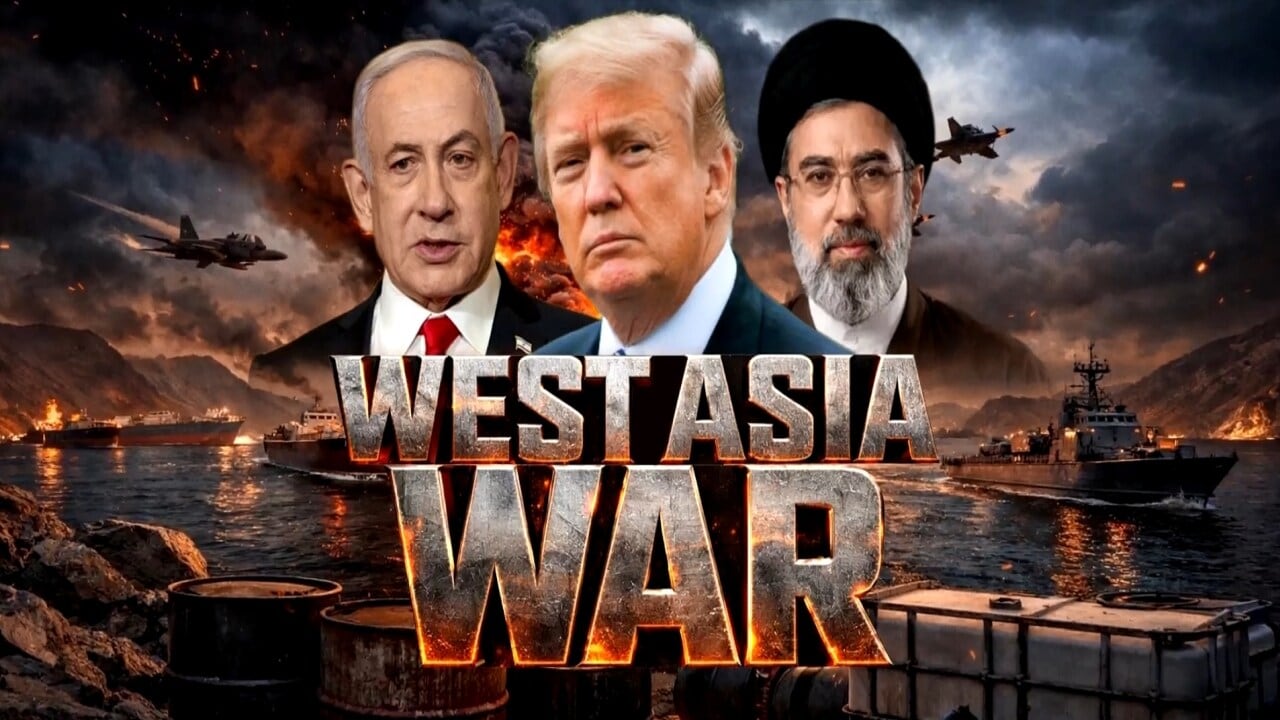
The coffee in your mug didn't just appear there. Neither did the fuel in your car or the semiconductor inside your phone. Most of us live in a state of blissful ignorance regarding the fragile, blue veins of global commerce until someone threatens to sever them. Right now, in the marble halls of Tehran and the salt-sprayed decks of destroyers in the Red Sea, a high-stakes game of geopolitical chess has moved from the shadows into a blinding, dangerous light.
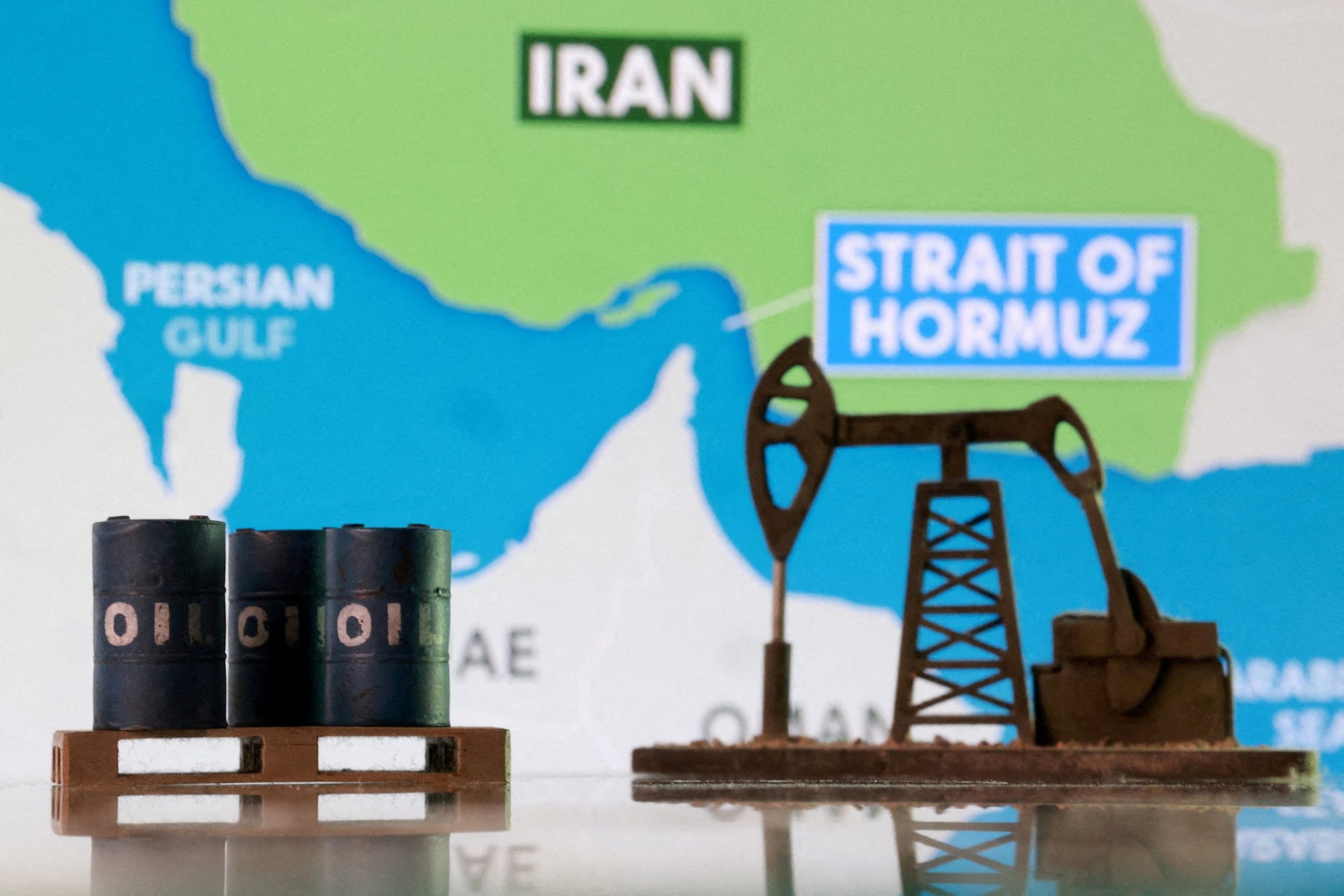
Iranian Parliamentary Speaker Mohammad Bagher Ghalibaf recently sat before microphones and issued a statement that sent a shudder through the global shipping industry. He didn't just criticize policy. He spoke of a "chokehold." Specifically, he suggested that the Bab al-Mandeb Strait—a narrow, treacherous neck of water connecting the Red Sea to the Gulf of Aden—could be squeezed shut.
To understand why this matters, stop looking at maps and start looking at your local grocery store.
The Gate of Tears
Bab al-Mandeb translates literally to "The Gate of Tears." It is a fitting name for a strip of water only eighteen miles wide at its narrowest point. Imagine a hypothetical merchant captain named Elias. He is commanding a vessel the size of an Empire State Building, laden with thousands of steel containers. As he approaches this strait, he isn't just navigating currents; he is navigating a graveyard of empires.
If Elias is forced to turn around because the strait is closed, the consequences ripple through your bank account within weeks. To bypass this tiny gap, ships must circumnavigate the entire continent of Africa. That adds ten days to a journey. It burns millions of dollars in extra fuel. It disrupts the "just-in-time" supply chain that keeps our modern world from collapsing into chaos.
When an official like Ghalibaf mentions choking this strait, he isn't just talking about a military maneuver. He is talking about holding the global economy hostage. Iran’s rhetoric has sharpened as the conflict involving Israel and Gaza continues to bleed across borders, drawing in the United States and its allies. The tension is no longer a slow burn. It is a flashpoint.
The Mathematics of Conflict
War is often discussed in terms of ideology, but it is felt in the cold reality of logistics. The United States has deployed a massive naval presence to the region, operating under the banner of "Operation Prosperity Guardian." It is a name that sounds like a corporate insurance policy, but the reality is gritty, metallic, and loud.
Consider the cost-exchange ratio. It is a concept that keeps admirals awake at night. A group like the Houthis in Yemen, backed by Iranian intelligence and hardware, can launch a drone that costs roughly $2,000 to manufacture. To intercept that drone, a U.S. destroyer might fire a surface-to-air missile that costs $2 million.
$2,000 \text{ vs. } 2,000,000$.
The math is unsustainable. This is the "asymmetric" nature of the current crisis. Iran knows it doesn't need a fleet that matches the U.S. Navy ship-for-ship. It only needs to make the cost of passage too high for the world to bear. Ghalibaf’s threat to close the strait is the ultimate expression of this leverage. By suggesting that the Bab al-Mandeb is within their reach, Tehran is telling the West that the price of supporting Israel's military campaign in Gaza will be paid at the gas pump and the checkout counter.
The Shadow of the Speaker
Mohammad Bagher Ghalibaf is not a man prone to accidental outbursts. He is a former commander of the Revolutionary Guard’s air force. He understands the mechanics of pressure. When he speaks of "closing" the strait, he is signaling a shift from proxy warfare to a direct confrontation with the architecture of global trade.
But there is a flaw in the bravado. Closing a strait is not like closing a door. It is an act of war that invites a level of retaliation that could dismantle a nation's infrastructure. For Iran, the threat is often more powerful than the execution. If they actually blocked the flow of oil and goods, they would lose their remaining diplomatic cover with nations like China—countries that rely on those same shipping lanes to keep their own economies breathing.
The world watches the screen for "Live Updates," but the real story is written in the silence between the explosions. It is in the insurance companies in London suddenly hiking premiums by 400 percent. It is in the diverted tankers that are now hugging the Cape of Good Hope. It is in the quiet realization that our "seamless" world is held together by a few miles of water and the restraint of men with their hands on the triggers.
A World Held in Suspense
The rhetoric from Tehran is a mirror to the actions in Jerusalem and Washington. Each side believes they are the one being pushed into a corner. Israel views the Iranian-backed "Axis of Resistance" as an existential threat that must be dismantled, regardless of the maritime fallout. The United States finds itself in the exhausting position of the global policeman, trying to keep the lanes open while avoiding a full-scale regional conflagration that no one—not even the most hawkish generals—actually wants.
We often think of war as a series of battles. We should think of it as a series of broken promises. The promise that trade is neutral. The promise that certain paths are sacred.
Elias, our hypothetical captain, stands on his bridge and looks at the radar. He sees the blips of other ships, the jagged coastline of Yemen, and the distant silhouette of a grey hull belonging to a coalition warship. He knows that his safety depends on the ego and the calculations of men thousands of miles away in windowless rooms.
The Bab al-Mandeb is a narrow throat. When the words coming out of Tehran suggest a tightening of that throat, the whole world finds it a little harder to breathe. We are no longer looking at a localized conflict. We are looking at the fragility of the twentieth-century order being tested by twenty-first-century chaos.
The next time you pick up a product and see a "Made in..." label, remember the Gate of Tears. Remember that the distance between a stable life and a global crisis is exactly eighteen miles of salt water. The threats are loud, the stakes are invisible, and the water is getting very, very crowded.
Silence follows the Speaker’s words, but it is the heavy, electric silence that precedes a storm.