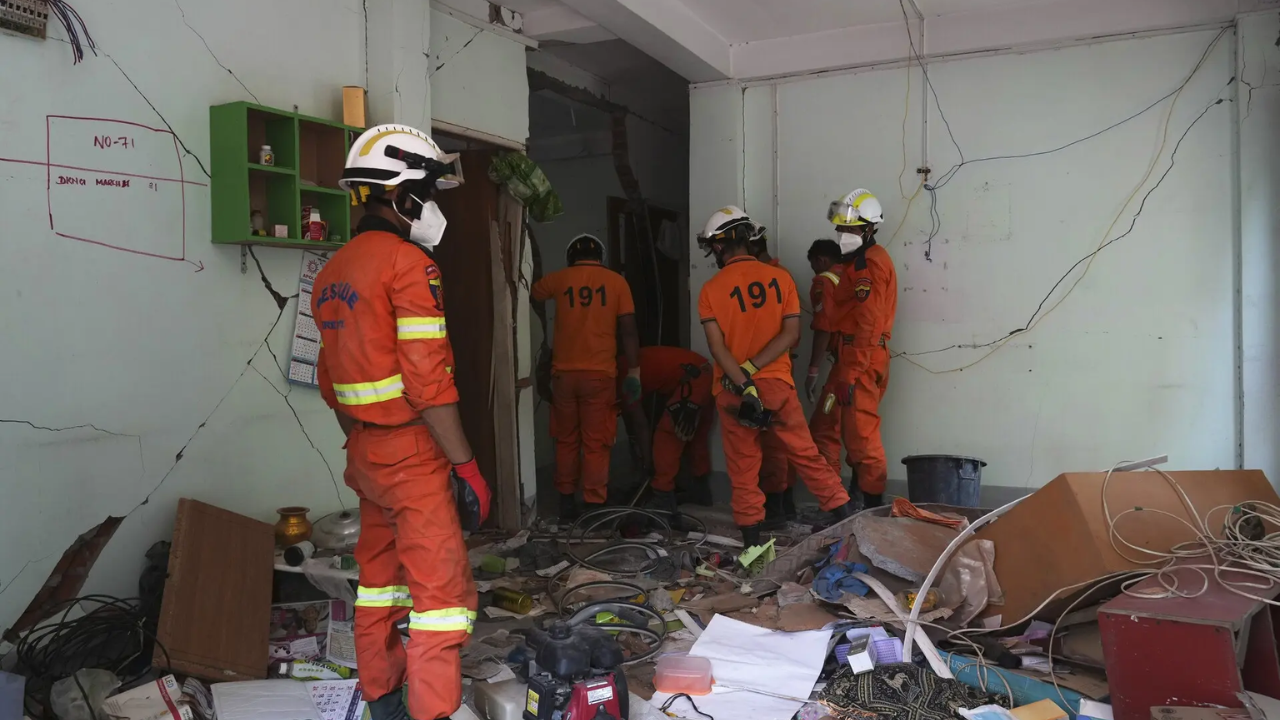
The catastrophic detonation of an explosives stockpile in Kaungtup village, Namhkam township, which resulted in at least 46 confirmed fatalities and dozens of injuries, exposes a critical vulnerability in the economic models of insurgent-governed territories. While initial media coverage focused on immediate casualty figures, the incident highlights a deeper structural issue: the operational risk function of non-state actors managing high-hazard industrial supply chains.
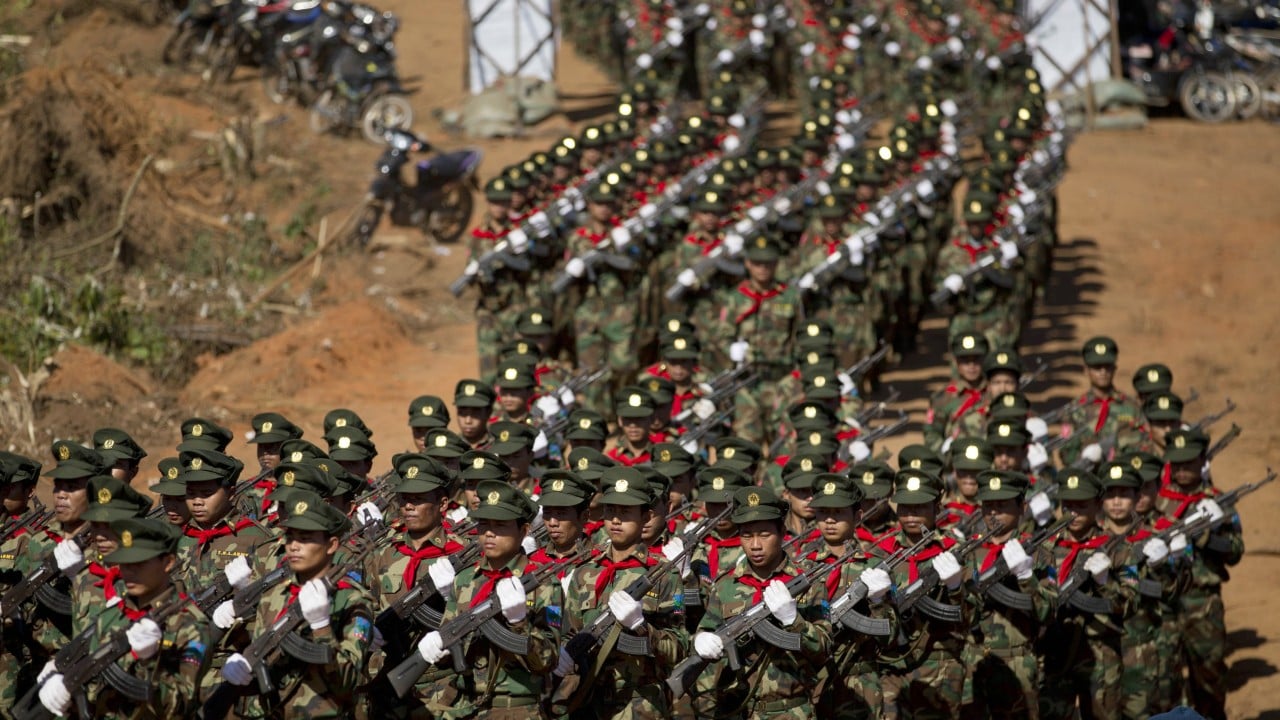
When an ethnic armed organization transitions from a combat force into a territorial sovereign, it inherits or establishes extraction-based revenue streams. In northeastern Shan State, the Ta'ang National Liberation Army (TNLA) has consolidated territorial control along the Chinese border, explicitly formalizing its involvement in mining and stone quarrying through its dedicated economic department. This commercial integration requires the procurement, storage, and distribution of industrial blasting agents—specifically gelignite. The failure to manage the physical degradation of these materials demonstrates how logistical bottlenecks and regulatory voids inside rebel-held enclaves create severe compound risks for local populations and border stability.
The Chemical Risk Profile of Sovereign Explosives Management
The TNLA economic department confirmed that the Kaungtup facility contained gelignite destined for regional mining operations. Gelignite, a nitrocellulose-based material dissolved in nitroglycerin and mixed with wood pulp or sodium nitrate, possesses distinct thermodynamic liabilities that require rigorous, climate-controlled storage conditions.
The primary failure mechanism of gelignite stems from its chemical instability over time, dictated by two main environmental variables:
- Syneresis (Exudation): Over extended periods or when subjected to fluctuating thermal cycles, the liquid nitroglycerin can separate from the porous matrix. This "sweeping" effect results in pure nitroglycerin pooling on the exterior surfaces of the material or leaking into storage containers. Nitroglycerin in this unabsorbed state is exceptionally sensitive to mechanical friction, impact, and minor thermal elevation.
- Hydrolytic Degradation: In high-humidity environments typical of sub-tropical regions, moisture absorption accelerates the decomposition of stabilizers within the explosive mixture. This reaction lowers the activation energy required to trigger a runaway exothermic reaction, leading to spontaneous auto-ignition.
In an active combat zone or a recently seized border enclave, standard industrial mitigation protocols are absent. Industrial-grade storage demands continuous temperature logging, spark-proof electrical infrastructure, and humidity control systems. When non-state actors store high-velocity explosives in standard masonry or timber structures within civilian zones, they eliminate the safety margins engineered into modern industrial logistics. The proximity of the Kaungtup storage building to residential quarters—evidenced by the destruction of over 100 surrounding houses—indicates a complete absence of blast-radius zoning laws, transforming an industrial storage failure into a mass-casualty event.
The Political Economy of Rebel Extraction Networks
The presence of significant gelignite stockpiles three kilometers south of the Chinese border underlines the economic imperatives driving the TNLA and its allies within the Three Brotherhood Alliance. To sustain governance structures, purchase military hardware, and maintain standing forces, non-state armed groups must monetize local geological assets.
+-----------------------------------------------------------+
|               Rebel Revenue Generation Cycle             |
+-----------------------------------------------------------+
|                                                           |
|  [Territorial Control] -> [Taxation & Resource Rights]    |
|           ^                                    |          |
|           |                                    v          |
|  [Military Funding]   <-   [Direct Mining Production]     |
|                                                           |
+-----------------------------------------------------------+
This economic model relies on a decentralized, low-overhead supply chain. The TNLA acts as both a regulatory authority and a direct participant in the extractive economy. By stockpiling blasting materials centrally to supply various mining and stone quarrying operations, the economic department functions as a commercial distributor.
This dual role introduces institutional blind spots. In standard market economies, state regulators enforce separation between industrial operators and safety inspectors. In an insurgent-controlled enclave, the entity generating revenue from the extraction process is identical to the entity enforcing safety standards. The structural pressure to maximize output and secure hard currency incentivizes the deferral of maintenance, the over-allocation of inventory beyond storage capacity, and the utilization of subpar, improvised storage infrastructure.
Border Proximity and the Geopolitical Friction Function
The location of the blast introduces immediate complications into the cross-border dynamics between northeastern Myanmar and Yunnan province. China’s state media apparatus, including CCTV, immediately documented the event, signaling Beijing's close monitoring of the security equilibrium along its perimeter.
For China, the stability of border trade routes is tied directly to the administrative competence of the actors holding territory. The Three Brotherhood Alliance’s 2023 offensive displaced central government forces from major border crossings, forcing Beijing to manage a de facto diplomatic relationship with a coalition of ethnic armies.
Events like the Namhkam explosion introduce specific variables into China's strategic calculus:
- Supply Chain Disruption: Unexpected explosions within vital border corridors interrupt trade flows and create immediate security concerns regarding the spillover of physical debris or shockwaves across the international boundary.
- Illicit Material Inflow: The storage of large quantities of industrial explosives near the border highlights the porosity of chemical supply chains. It indicates that either black-market procurement networks are functioning efficiently across borders, or that domestic diversions from state factories are occurring at scale.
- Refugee and Humanitarian Pressures: The destruction of residential infrastructure forces displacement, driving local populations toward the Chinese border and complicating frontier border-control operations.
Emergency Response Deficits in Non-Recognized Territories
The aftermath of the explosion emphasizes the logistical constraints faced by local rescue units operating outside the framework of formal state infrastructure. The initial recovery of 46 bodies and the transport of 74 injured individuals to the Namhkam township hospital overextended regional medical capabilities.
The operational bottleneck is defined by specific resource deficits:
- Advanced Trauma Infrastructure: Local hospitals in conflict zones function primarily as triage stations. They lack the specialized burn units, orthopedic surgical capacity, and blood banking infrastructure required to treat high-velocity blast injuries and severe thermal trauma simultaneously.
- Heavy Urban Search and Rescue Equipment: Extricating victims from more than 100 collapsed structures requires specialized machinery. Without hydraulic cutters, concrete breathers, and heavy cranes, volunteer rescue teams must rely on manual labor, drastically extending the time required to clear debris and reducing the survival probability of trapped individuals.
- Institutional Coordination: The absence of a centralized civil defense agency means that emergency responses are ad hoc, reliant on fragmented communications networks and voluntary community organizations operating under acute security risks.
Strategic Trajectory for Enclave Resource Operations
To mitigate the recurrence of similar industrial disasters while preserving their economic baseline, non-state territorial managers must implement formal risk-reduction protocols. The current model of unzoned, unregulated explosive stockpiling threatens both the demographic stability of their territories and their external political legitimacy with neighboring states.
The immediate requirement is the establishment of strict separation between military logistics, commercial storage, and civilian centers. Non-state economic departments must institute a decentralized storage model, utilizing low-density, earthen-mounded magazines positioned far from residential perimeters. Furthermore, establishing a technical audit mechanism for aging chemical inventories is critical. The TNLA must implement systematic disposal protocols for degraded gelignite before syneresis reaches critical thresholds. Failure to transition from improvised war-time logistics to formal, structured industrial safety frameworks will ensure that resource extraction activities remain a chronic internal threat to the populations living within these autonomous zones.