The Pentagon wants to keep its friends close and journalists under guard. On May 18, 2026, The New York Times dropped a fresh lawsuit against the Department of Defense. It marks the second time in five months the paper has dragged the military's leadership into federal court over press access.
This isn't a minor administrative tiff about badge colors or parking spots. It's an aggressive legal showdown over an "interim" policy that requires journalists to have a government escort at all times while inside the building. Basically, if you are a reporter trying to verify a tip, the Pentagon wants a minder watching your every move.
The Chaperone Strategy
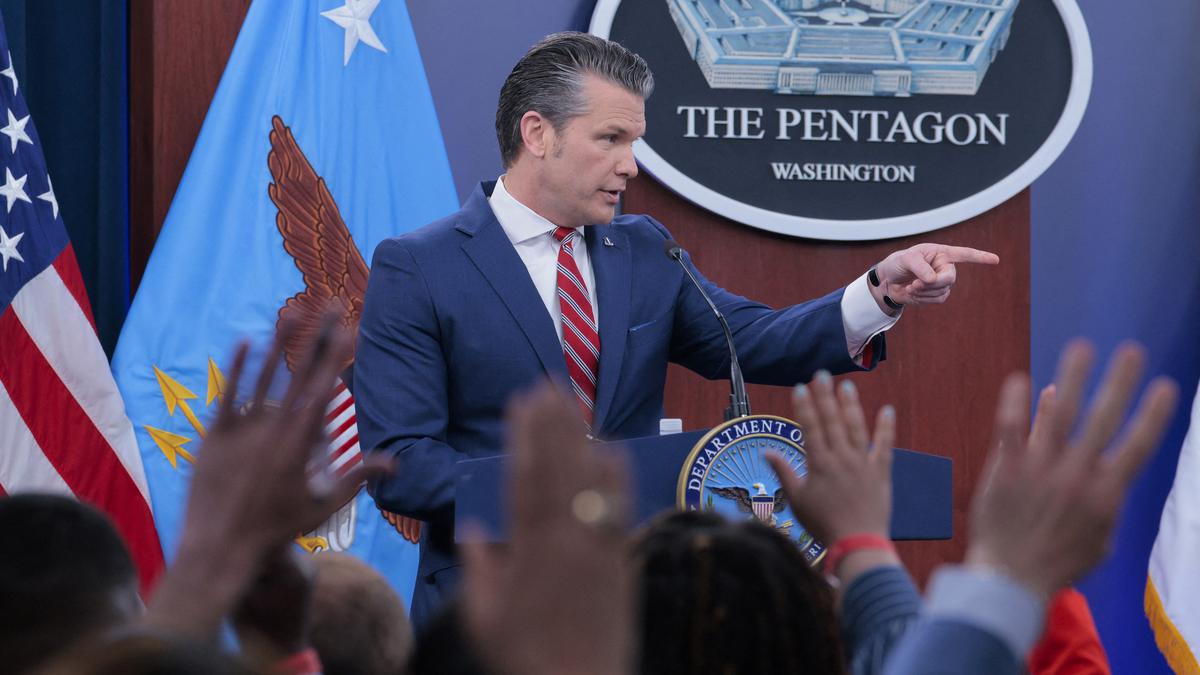
The lawsuit names Defense Secretary Pete Hegseth, chief spokesperson Sean Parnell, and special adviser Timothy Parlatore as defendants. Filed on behalf of the Times and national security reporter Julian E. Barnes, the complaint targets rules that have effectively ended decades of unescorted press movement through the building's unsecured corridors.
Think about how reporting actually works. A journalist doesn't just sit through a sanitized briefing, print the press release, and call it a day. They walk the halls. They drop by different public affairs offices scattered across the massive complex. They ask quick questions as events break.
The new system breaks that workflow completely. To ask a single question, a reporter must email for an appointment, wait for a reply, get paired with an escort, ask the question, and get marched right back to a library outside the main facility. Want to follow up with a second source? Restart the entire process from scratch. It forces journalists to spend hours chasing schedulers or give up on the story entirely.
Why the Rules Changed
Tensions started cooking late last year. In December, the Times sued over a policy requiring reporters to sign a code of conduct. That document included strict rules against the "solicitation" of information from defense employees. The implication was clear: ask too many hard questions, and you could be labeled a security risk and kicked out.
Major news organizations—including CBS News, ABC News, NBC News, CNN, and Fox News—refused to sign away their rights. They walked out of the press bullpen.
In March, U.S. District Judge Paul L. Friedman handed the press a massive win, striking down those rules as unconstitutional violations of the First and Fifth amendments. He noted that the policy seemed explicitly engineered to weed out independent voices and replace them with a press corps friendlier to the administration.
Instead of backing down, the Pentagon shifted tactics. They permanently closed the traditional media workspace inside the building and slapped down the mandatory escort rule. Judge Friedman ruled that this workaround violated his initial order. However, an appeals court stepped in, granting a temporary stay that keeps the escort policy active while the broader appeal winds its way through the system.
That stay forced the Times to file this brand-new lawsuit, taking direct aim at the constitutional validity of the chaperone rule.
The National Security Counter-Argument
The Pentagon isn't hiding its hostility. Hours after the suit hit the docket, spokesperson Sean Parnell took to social media to blast the newspaper. He claimed the legal action is an attempt by reporters to get their hands on classified information.
Parnell argued that journalists want to roam the building freely without supervision, a privilege they don't enjoy in other federal departments. From the government's perspective, the policy is a lawful, narrow measure to prevent criminal leaks of highly sensitive military secrets.
But there is a massive difference between securing classified war rooms and locking down public affairs corridors. The Times argues the rules aren't about security; they are a retaliatory play to ensure only approved narratives make it outside the building.
What is at Stake right now
This fight isn't happening in a vacuum. The press restrictions come at a moment of heavy military and foreign policy developments. The U.S. military is currently dealing with the fallout from the conflict with Iran, the recent capture of the President of Venezuela, and Secretary Hegseth's sweeping firings of high-ranking military officials.
When a defense secretary reshapes the military leadership during active global conflicts, independent oversight becomes critical. If reporters can't talk to sources without a political appointee listening in, the public only gets the official script.
If you want to track how this fight develops, watch the D.C. District Court docket for the Pentagon's formal response to this new filing. At the same time, keep an eye on the separate appeals court track regarding the March injunction. The intersection of those two legal paths will ultimately decide whether the press remains a watchdog or becomes a spectator at the nation's military headquarters.