The hum of an electrical substation is a sound you only notice when it stops. It is a low, vibrating baseline of modern existence, the invisible pulse that keeps the milk cold, the water running, and the lights flickering in the window across the street. In the early hours of a damp spring morning, that hum died across parts of western Russia. It did not fade. It shattered.
Hundreds of miles away, in Kyiv, fingers tapped on keyboards. Maps flickered with telemetry data. For months, the war had been a grinding, bloody stalemate in the mud of the Donbas, a horizontal tragedy measured in meters and body bags. But lately, the geometry of the conflict has shifted. The sky has become a chessboard, and the pieces are small, loud, and incredibly cheap.
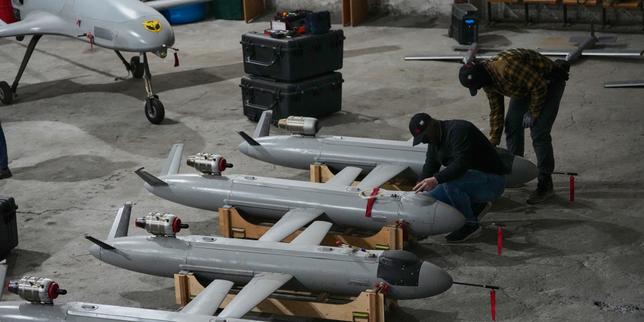
Ukraine is playing a new game. By sending waves of long-range drones deep into Russian territory, it is bypassing the trench lines to strike at the literal nervous system of the Russian war machine: its energy infrastructure.
The Anatomy of a Spark
Imagine a massive, interconnected web of copper and steel stretching across eleven time zones. That is the Russian power grid. It is vast, but vulnerability is baked into its very scale. You do not need to march an army to Moscow to paralyze a city; you just need to destroy a few highly specialized transformers that take years to manufacture and cost millions of dollars.
That night, the targets were oil depots and energy facilities in Smolensk and Lipetsk.
To understand the strategy, look at how a modern military moves. Tanks run on diesel. Fighter jets burn kerosene. Command bunkers require a constant, uninterrupted stream of electricity to keep their servers from overheating. When a Ukrainian drone strikes an oil refinery in Russia, it is not just causing a spectacular fire for social media. It is performing a slow-motion amputation.
By bleeding Russia’s fuel reserves and destabilizing its power grid, Ukraine is trying to force a terrible choice upon Moscow: protect the front lines, or protect the homeland.
The response from Moscow was swift and predictable, painted in the familiar language of outrage. Russian officials claimed to have intercepted dozens of drones, downplaying the damage even as videos of towering orange infernos lit up Telegram channels. But the smoke rolling across the Russian countryside told a different story. The war, long kept at a comfortable distance for most Russian citizens, had arrived on their doorstep in the smell of burning petroleum.
The Shadow Over Zaporizhzhia
Yet, as the fires burned in the north, a far more terrifying accusation began to circulate from the south, centered on a place whose very name evokes collective dread. Zaporizhzhia.
Europe’s largest nuclear power plant sits like a sleeping leviathan on the banks of the Dnipro River. It is currently a fortress occupied by Russian troops, a bizarre and volatile fusion of a frontline military base and a highly sensitive atomic facility.
Moscow claimed that Ukrainian drones had targeted the plant, specifically aiming for the dome of one of its reactors. The accusation was designed to trigger panic in every capital from Berlin to Washington. A nuclear strike. An existential threat.
Ukraine denied the claim immediately, calling it a staged provocation by Russia to paint Kyiv as a reckless actor willing to risk a continental catastrophe. The International Atomic Energy Agency (IAEA) confirmed drone strikes had occurred at the site but stopped short of assigning blame, warning instead that whoever was pulling the trigger was playing with fire next to a powder keg.
The truth inside Zaporizhzhia is shrouded in the fog of war, but the physics of the situation are chillingly clear.
[Cooling Systems] ---> Dependent on external power grid
       |
[Grid Failure] ------> Risk of meltdown (Chernobyl/Fukushima scenario)
A nuclear reactor does not need to be hit by a missile to fail. It needs to lose its cooling. And what keeps the cooling pumps running? The very same electrical grid that is currently being targeted across the region. If the external power lines feeding Zaporizhzhia are severed, the plant must rely on diesel generators. Generators require fuel. Fuel that is currently burning in depots across Smolensk.
It is a terrifyingly interconnected loop. The dominoes are lined up, and the wind is blowing.
The Calculus of the Cheap
There is a profound asymmetry to this phase of the war. A Russian air defense missile, a complex piece of engineering packed with rare earth elements and advanced radar tracking, can cost upwards of a million dollars. The Ukrainian drone it is trying to shoot down is often made of fiberglass, powered by a lawnmower engine, and guided by a GPS chip you could buy online.
Even when Russian air defenses work perfectly, they lose.
If you fire a million-dollar missile to destroy a twenty-thousand-dollar drone, you are bankrupting yourself one interception at a time. Ukraine is leveraging this economic math to its absolute limit. They are forcing Russia to expend its limited stockpiles of high-tech weaponry on cheap decoys, clearing the path for the drones that carry the real payloads.
But this strategy carries an immense psychological burden for the people living beneath these flight paths.
Consider the reality of a family in a Ukrainian city, waking up to the wail of air raid sirens as Russian missiles retaliate for the strikes on the oil depots. Or consider a Russian family in Smolensk, hearing the distinct, chainsaw-like drone of a Ukrainian UAV passing overhead in the dark. The frontline is no longer a line on a map. It is the ceiling above your head.
The Invisible Stakes
We tend to view war through the lens of geopolitics, treaties, and troop movements. We talk about energy independence and strategic depth as if they are abstract concepts in a university seminar. They are not.
They are the sound of a refrigerator stopping. They are the sudden darkness in a hospital operating room. They are the cold fear of looking at a nuclear cooling tower and wondering if the people inside know what they are doing.
The strikes on Russia’s energy sector represent a calculated gamble by Kyiv. It is an admission that the war cannot be won by defense alone, that the sanctuary of the Russian homeland must be disrupted if the balance of power is ever to shift. It is a strategy born of desperation, ingenuity, and a cold recognition of how modern societies function.
The fires in Smolensk will eventually be put out. The transformers will be patched together with whatever spare parts can be found. But the illusion of safety is gone, burned away in the realization that in the modern world, the distance between peace and chaos is only as wide as a power line.
Somewhere in the darkness of eastern Europe, another drone is starting its engine. The hum is returning, but it is not the hum of electricity. It is the sound of what comes next.