The air in northeastern Spain during midsummer carries a specific weight. It smells of baked earth, wild rosemary, and the salt blowing in from the Costa Brava. In the small neighborhoods outside Girona, June evenings belong to the community. People sit outside. Children run through the squares. It is a time for shared meals, loud laughter, and the easy rhythm of Mediterranean life.
Then came the gunfire.
It takes only a fraction of a second for a sanctuary to fracture. When a dispute erupted in the Font de la Pólvora neighborhood during a night of celebration, the sound of celebration was instantly swallowed by the cracks of an assault rifle. By the time the echoes faded into the hills, two people were dead, multiple others were fighting for their lives, and the collective psyche of a region was altered forever.
We often read about violence in the abstract. Statistics mask the human toll. We see numbers on a screen and turn the page, insulated by the distance of a headline. But bullets do not care about boundaries, and they certainly do not care about innocence.
The Anatomy of a Fractured Night
To understand what happened in Girona, one must look past the clinical reports issued by the Mossos d'Esquadra, the Catalan regional police. The facts tell us that a confrontation between two families escalated with terrifying speed. Someone brought out a firearm—reportedly an AK-47 variant—and opened fire on a crowd.
But facts alone cannot capture the sensory reality of that moment.
Imagine the sudden shift from a warm, lively neighborhood gathering to absolute chaos. The smell of gunpowder mixing with the scent of grilled food. The blinding confusion of muzzle flashes in the dark. A 48-year-old woman and a 44-year-old man fell, their lives ended in an instant on the tarmac of their own neighborhood. They were neighbors, parents, vital threads in the local fabric.
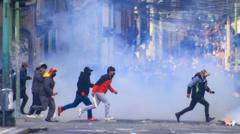
The immediate aftermath was not marked by silence, but by a rising tide of panic. Sirens wailed from the city center, winding their way toward Font de la Pólvora. Paramedics rushed into a scene that resembled a combat zone rather than a residential street.
The ripples of that violence extended immediately to the nearby Josep Trueta Hospital. As news of the shooting spread, dozens of relatives and distraught community members descended upon the medical center. Grief is rarely quiet. It is loud, volatile, and heavy. The hospital, a place meant for healing, suddenly required a massive deployment of riot police just to secure the perimeter and allow doctors to do their work.
The Innocent Targets
The true horror of the Girona shooting lies not just in the fatalities, but in the vulnerability of those caught in the crossfire. Among the injured rushed to the emergency ward were two young children. Reports indicates one was an eleven-month-old infant and the other a toddler of just under three years old.
Think about that for a moment.
A child who has barely taken their first steps, whose world is defined entirely by the safety of a parent's arms, was hospitalized because of a neighborhood feud fought with military-grade weaponry. The physical wounds may heal over time, managed by skilled surgeons and modern medicine. The psychological shrapnel, however, embeds itself deeply. How does a community reassure its children that the street outside their front door is safe when the memory of gunfire lingers in the air?
This is the hidden tax of public violence. It robs the youngest citizens of their sense of security before they even have the vocabulary to understand what has been stolen from them.
Weapons on the Margin
The escalation of local disputes into lethal mass casualty events points to a deeper, more unsettling trend across Europe. Spain maintains strict gun control laws, yet high-powered automatic weapons still find their way into the hands of individuals willing to use them over minor grievances.
The black market for firearms leaves a trail of devastation across the continent. When a handgun is introduced to a conflict, the danger doubles. When an automatic rifle is introduced, the outcome is almost always tragic. The margin for error vanishes. The bullets travel through walls, through vehicles, and through crowds of bystanders.
The investigation in Girona quickly expanded beyond a simple homicide inquiry. It became a manhunt for the perpetrators who fled the scene, but more importantly, it reopened a difficult conversation about how these weapons breach national borders and enter quiet communities. It forces authorities to confront the reality that beneath the surface of peaceful tourist towns and historic cities lies a volatile undercurrent of illicit trafficking that can erupt without warning.
Restoring the Peace
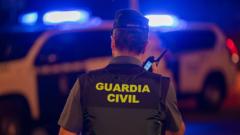
In the days following the tragedy, the streets of Font de la Pólvora remained tense. The police presence was constant, marked by flashing blue lights and heavily armed officers patrolling the corners. The neighborhood became a fortress, guarded against the threat of retaliatory violence.
But peace cannot be enforced solely by the barrel of a police rifle. True resolution requires a painstaking rebuilding of trust, a cooling of generational friction, and a collective decision by the community that violence is an unacceptable currency for resolving disputes.
The physical evidence of that night will eventually be washed away. The bullet casings will be logged into evidence lockers, the hospital corridors will return to their usual quiet routines, and the news cycle will inevitably shift its focus elsewhere. Yet, for the families who lost their loved ones and for the parents holding their injured infants in hospital rooms, the world changed permanently on that June evening.
The true measure of a society is how it responds when its safest spaces are violated. As Girona mourns, the hope remains that the memory of this tragedy will catalyze a deeper commitment to disarmament and community intervention, ensuring that the next midsummer night brings nothing but the sound of children playing in the street.