Personalist diplomacy between authoritarian leaders is frequently mischaracterized by Western observers as a superficial byproduct of shared grievances or cultural performance. Informal interactions—such as the consumption of regional spirits, high-speed rail journeys, and state-orchestrated boat tours—are not merely theatrical backdrop; they function as a highly calculated, structural mechanism for reducing transaction costs and mitigating the commitment problems inherent to non-binding international coalitions.
In the absence of formal institutional integration, bilateral alignment between China and Russia relies on a specific framework: the strategic optimization of interpersonal trust to substitute for enforceable legal treaties. This analysis deconstructs the structural variables driving the relationship between Xi Jinping and Vladimir Putin, mapping the utility functions of informal diplomacy and the systemic limitations of relying on personal alignment to sustain a long-term geopolitical axis.
The Structural Deficit of Authoritarian Alliances
To understand why personal rapport carries disproportionate weight in the Beijing-Moscow axis, one must first isolate the institutional deficits of non-democratic alignments. Democratic alliances, such as NATO, are anchored in deeply institutionalized, transparent legal frameworks ratified by legislative bodies. These structures ensure continuity across changes in political leadership, lowering the risk of sudden policy reversal.
Conversely, the Sino-Russian alignment operates within a high-risk environment characterized by two structural vulnerabilities:
- The Credible Commitment Problem: Neither state can rely on domestic institutional constraints to prevent the other from reneging on agreements. Because executive power is concentrated, policy can pivot overnight based on the shifting calculations of a single ruler.
- Asymmetric Strategic Vulnerabilities: China possesses a gross domestic product roughly ten times larger than Russia’s, alongside superior technological and manufacturing capacity. This structural asymmetry creates an implicit fear of vassalage within the Russian security apparatus, while China faces the risk of being dragged into protracted, secondary conflicts that disrupt its global economic integration.
To offset these vulnerabilities, the two leaders utilize informal diplomacy as a signaling mechanism. By dedicating disproportionate time to private, unstructured bilateral engagements, they signal prioritize-status to domestic elites and external adversaries alike, using personal reputation as collateral to secure state-level alignment.
The Three Pillars of Personalist Interoperability
The cultivation of rapport between the Chinese and Russian heads of state relies on three distinct operational pillars, each designed to address a specific strategic deficit.
1. Ideological Congruence and Autocratic Survival
The personal alignment between the two executives is fundamentally rooted in a shared diagnostic model of global power distribution. Both leadership cadres view the post-Cold War international order as an engineered hierarchy that structurally privileges Western liberal-democratic norms at the expense of sovereign state autonomy.
This shared diagnosis creates a powerful baseline of cognitive empathy. When the leaders engage in informal settings, they are not merely building rapport; they are validating a mutual survival strategy. This alignment operates on a transactional loop: Russia requires economic insulation and diplomatic cover to counter Western isolation, while China requires a secure, non-hostile northern border and a guaranteed supply of upstream energy inputs to hedge against potential maritime blockades in the Indo-Pacific.
2. High-Value Reciprocal Signaling
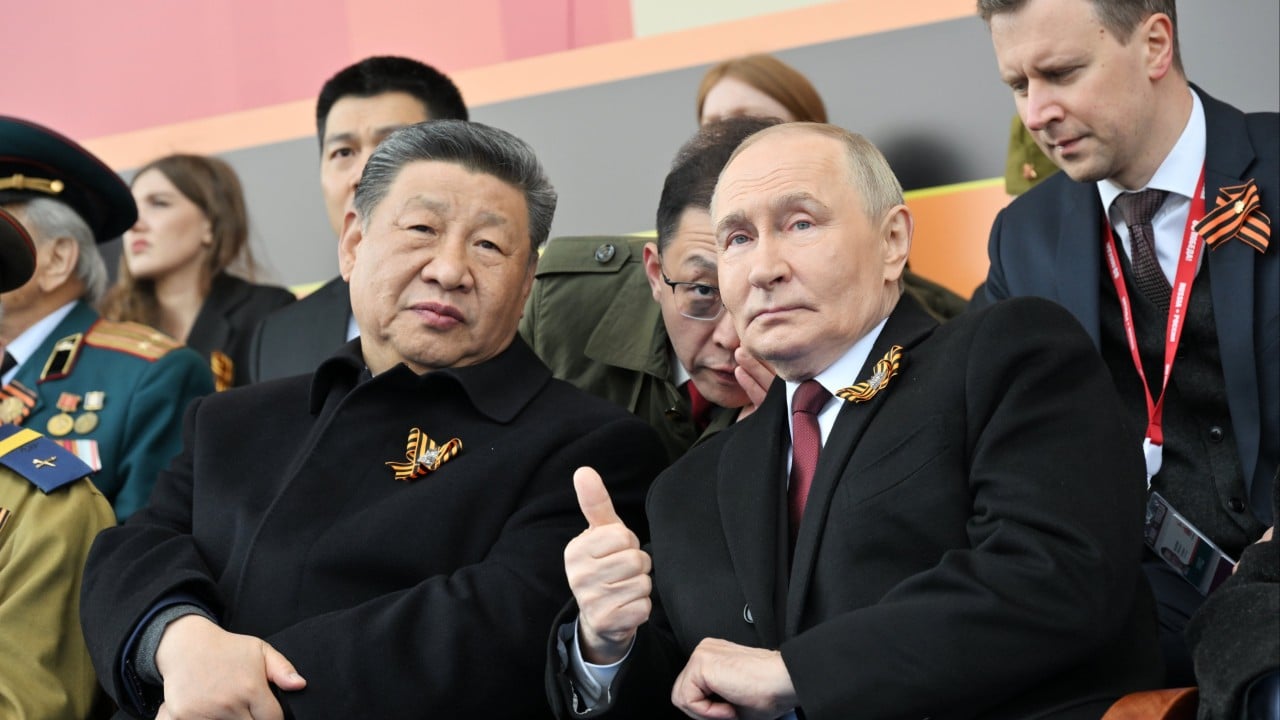
Informal activities—such as sharing pancakes in Vladivostok or traveling by high-speed rail to Tianjin—serve as highly visible, low-cost signals of strategic alignment. In international relations theory, cheap talk carries little weight because it requires no sacrifice. However, the deliberate expenditure of an autocrat's most scarce resource—time—functions as a costly signal to internal and external audiences.
- Internal Signaling: For the Russian siloviki (security elite) and the Chinese Communist Party Central Committee, the visible proximity of the two leaders establishes a clear bureaucratic directive. It signals that cross-border initiatives, from joint military exercises to ruble-yuan clearing mechanisms, carry direct executive mandate, suppressing institutional resistance within their respective states.
- External Signaling: These highly publicized interactions are explicitly timed to disrupt Western diplomatic narratives. Demonstrating high-level interpersonal cohesion during periods of intense geopolitical pressure serves to telegraph the futility of Western attempts to drive a wedge between Beijing and Moscow.
3. The Reduction of Information Asymmetry
In highly centralized regimes, intelligence and diplomatic bureaucracies frequently distort information to match the perceived preferences of the leadership. This internal echo chamber poses a significant risk during fast-moving international crises.
Direct, unscripted communication channels between the two heads of state allow for the circumvention of bureaucratic filters. By establishing a baseline of personal familiarity, the leaders can communicate strategic red lines, clarify intentions, and manage potential flashpoints—such as overlapping spheres of influence in Central Asia—without the friction of formal diplomatic posturing.
The Cost Function of Personalist Diplomacy
While personal rapport provides short-term agility and strategic signaling value, it introduces significant long-term vulnerabilities into the bilateral relationship. The reliance on individual alignment creates a fragile diplomatic architecture subject to structural diminishing returns.
The Institutional Transfer Bottleneck
The primary limitation of personalist diplomacy is its inability to scale or institutionalize efficiently. Trust generated at the executive level does not automatically translate into friction-free cooperation at the bureaucratic or private sector levels.
Chinese state-owned enterprises and financial institutions remain highly sensitive to Western secondary sanctions. Despite political declarations of a "no-limits" partnership, Chinese banks routinely restrict or delay transactions involving Russian entities to protect their access to the US dollar-denominated global clearing system. The personal rapport of the leadership cannot alter the cold economic calculus of financial institutions facing existential regulatory risks.
The Successor Continuity Risk
An alliance anchored in personalist dynamics faces an exponential decay curve upon the transition of power. Because the trust framework is tied to the individual actors rather than institutionalized processes, any change in leadership in either Moscow or Beijing resets the diplomatic ledger.
[Personalist Architecture] -> High Executive Trust -> Fragile Institutionalization -> High Successor Risk
[Institutional Architecture] -> Low Individual Dependence -> Resilient Frameworks -> Low Successor Risk
The next iteration of leadership may not share the same historical reference points, personal chemistry, or domestic political incentives. This reality forces both states to front-load tactical gains while the current leadership configuration remains intact, creating an inherently unstable, short-term strategic horizon.
Strategic Realignment and the Indo-Pacific Equilibrium
For external policymakers, misinterpreting the nature of this personalist alignment leads to flawed strategic prescriptions. Attempting to sever the bilateral relationship through traditional diplomatic inducements is structurally unfeasible given the depth of the shared ideological framework at the executive level.
The optimal strategic response requires Western alliances to focus on the material asymmetries and friction points that personal rapport attempts to conceal.
First, the containment of this axis depends on increasing the economic enforcement mechanisms surrounding secondary sanctions. By raising the cost of compliance for Chinese financial institutions, Western economies can systematically widen the divergence between the political rhetoric of the Chinese leadership and the operational realities of its economic sectors.
Second, stability in the Indo-Pacific and Eastern European theaters requires a unambiguous reinforcement of material deterrence. Because the Sino-Russian relationship is fundamentally transactional and designed to exploit perceived structural weakness, a resolute, institutionalized deployment of military and economic counterweights remains the only reliable mechanism to check the expansionist impulses of this personalized authoritarian axis. The performance of personal friendship will continue, but its operational limits are strictly bounded by the hard realities of state self-interest and material capability.