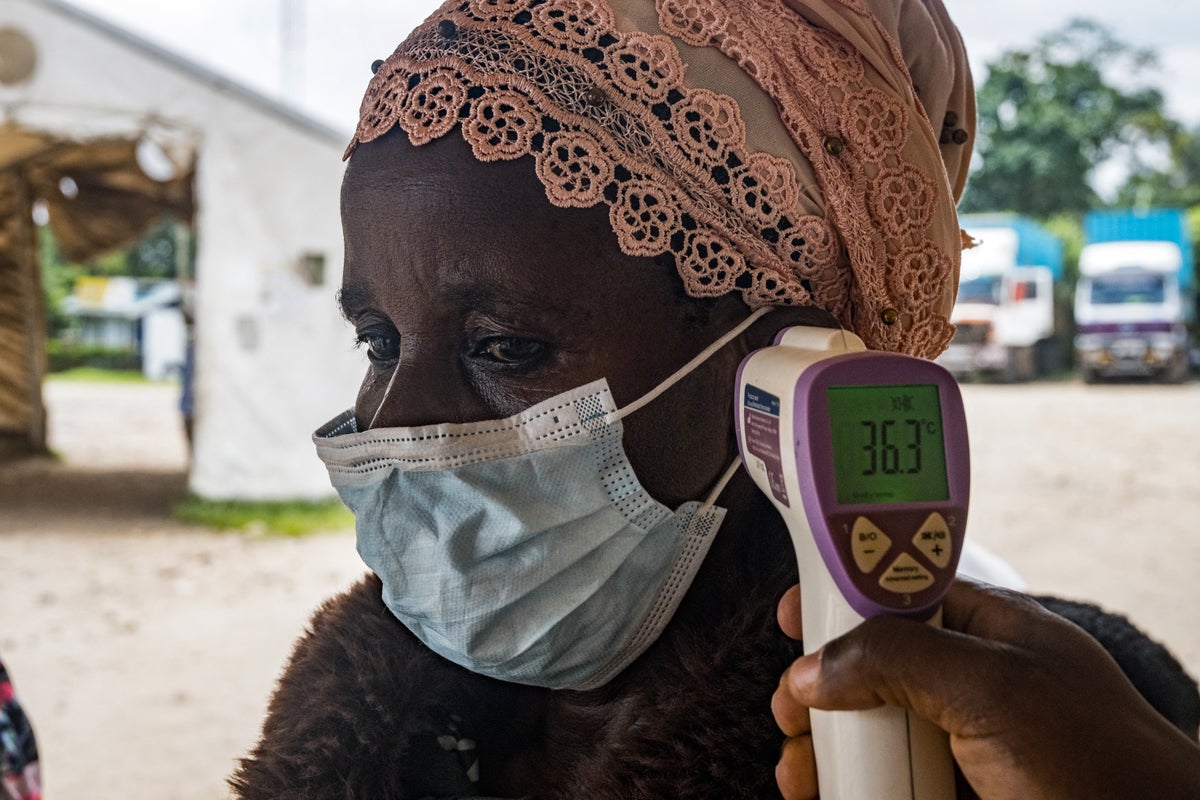
The next pandemic isn't a "what if" scenario. It’s a mathematical certainty. Yet, we're watching the US and UK pull back funding from the very systems designed to stop these fires before they jump across borders. When Ebola hit West Africa years ago, it wasn't just a local tragedy. It was a brutal wake-up call that showed how fast a virus can outpace a slow-moving, cash-strapped response. If you think those aid cuts only affect people thousands of miles away, you're missing the point. In a world of global flight paths, a virus in a remote village is only two planes away from your front door.
Cutting international aid isn't just a budget move. It's a security risk. When we talk about the Ebola outbreak and the subsequent reduction in foreign assistance from major powers like the UK and the US, we're talking about dismantling our early warning system. Without that funding, clinics close. Disease surveillance stops. Health workers go unpaid. You can't fight a ghost, and without testing capacity on the ground, that's exactly what these viruses become.
The high price of ignoring the Ebola wake-up call
Budget hawks often argue that we should "spend the money at home." It sounds logical until you see the bill for a global pandemic. The 2014-2016 Ebola outbreak cost billions in lost economic growth and direct response efforts. Compare that to the relatively small cost of maintaining health infrastructure in high-risk zones. It’s the difference between buying a fire extinguisher and rebuilding the entire neighborhood after the city burns down.
The UK significantly reduced its overseas aid budget from 0.7% to 0.5% of GNI in recent years. This wasn't just a line item change; it resulted in a massive withdrawal from global health programs. Similarly, US funding for global health security has faced constant political volatility. These aren't just numbers on a spreadsheet. They represent the ability of a country like Sierra Leone or the Democratic Republic of Congo (DRC) to identify a cluster of strange deaths before they turn into an international crisis.
If a rural health post doesn't have the PPE or the training to isolate a patient with hemorrhagic fever, that patient goes home. They infect their family. They go to a local market. By the time the world wakes up, the R0 value has spiked, and we’re all in trouble. We've seen this movie before. We know how it ends. Yet, the political appetite for "discretionary" spending on global health is at an all-time low.
Why surveillance isn't a luxury
Disease surveillance is the backbone of global health. It involves monitoring hospitals, clinics, and even animal populations for signs of new pathogens. It's boring work. It's not a flashy ribbon-cutting ceremony. Because of that, it's usually the first thing to get cut when budgets tighten.
When the UK slashed its aid, programs focused on neglected tropical diseases and basic health infrastructure took a direct hit. The US has also seen shifts in how it allocates money through USAID and the CDC. When we stop funding these boots-on-the-ground operations, we lose our eyes. We're flying blind into a storm of emerging infectious diseases. Ebola is just the most famous face of the threat. There are others—Marburg, Lassa fever, and "Disease X"—waiting in the wings.
Foreign aid is actually domestic defense
Stop thinking of aid as charity. It's an investment in national security. The US Department of Defense knows this. They’ve long recognized that health instability in foreign regions leads to political instability, migration crises, and economic collapses that eventually hit American shores.
When a country's health system collapses under the weight of an outbreak, the ripple effects are massive. Trade stops. Supply chains break. We saw this during COVID-19, but Ebola is far more lethal. While COVID had a high transmission rate, Ebola kills up to 90% of those it infects, depending on the strain and the quality of care. If a virus with that kind of lethality goes global because we didn't want to spend a few million on rural clinics in Guinea, that's a historical failure of leadership.
The myth of the isolated outbreak
There’s a dangerous idea that we can just close the borders if things get bad. History proves that doesn't work. By the time you realize you need to close the border, the virus is already inside. It’s in the person who hasn't shown symptoms yet. It’s in the traveler who took three connecting flights.
The only way to truly protect a population in London or New York is to stop the outbreak at the source. This requires "surge capacity"—the ability to send money, supplies, and experts the moment a case is confirmed. Aid cuts have eroded that capacity. We’ve replaced a proactive shield with a reactive scramble.
What happens when the money dries up
Let’s look at the DRC. They've dealt with multiple Ebola outbreaks over the last decade. Each time, they’ve gotten better at it, but only because of international support and localized expertise. When that support is retracted, the progress isn't just paused; it's reversed.
- Loss of trained personnel: Doctors and nurses who have survived and fought Ebola move to other countries or different sectors when their grants disappear.
- Degradation of labs: Diagnostic tools require maintenance and consistent power. Without funding, the machines break, and samples have to be shipped hundreds of miles, wasting precious days.
- Erosion of trust: Public health relies on the trust of the community. If aid programs are inconsistent, local populations are less likely to cooperate with contact tracers or vaccination teams.
It takes years to build a functioning health network and about six months of "austerity" to destroy it. Once it's gone, you can't just flip a switch and bring it back when a crisis hits. The institutional memory vanishes.
The political cost of the 0.7 percent target
The UK’s decision to drop the 0.7% aid target was a blow to its "Global Britain" image. It signaled a retreat from the world stage at exactly the wrong time. While the government argued it was a temporary measure due to the pandemic's economic impact, the reality is that those funds were a lifeline for global health security. The US has seen similar tug-of-wars. One administration increases funding for the Global Health Security Agenda, and the next threatens to pull out of the WHO. This inconsistency is lethal.
Beyond the "feel good" narrative of aid
We need to stop talking about aid as "helping people" and start talking about it as "keeping us alive." The narrative of the benevolent West giving scraps to the "developing world" is patronizing and inaccurate. In reality, it's a mutual defense pact.
If we don't fund the fight against Ebola in West Africa, we'll spend ten times that amount on hospital prep in the West. We'll spend a hundred times that on economic stimulus when the markets tank because of a new "public health emergency of international concern." The math is simple, yet politicians choose the short-term win of a budget cut over the long-term safety of the public.
Next steps for a smarter strategy
The "wake-up call" hasn't been heard. We're still hitting the snooze button. To actually secure our future, the approach to aid needs to change from charity to infrastructure.
- Legislate the funding: Aid for global health security shouldn't be a political football. It needs to be ring-fenced and protected from shifting political winds in the US and UK.
- Support local manufacturing: We shouldn't just be shipping PPE and vaccines from the West. Aid should focus on building the capacity for African nations to produce their own medical supplies.
- Invest in "One Health": Most new diseases come from animals. We need to fund programs that monitor the interface between wildlife and human settlements.
- Fix the WHO: Instead of threatening to leave, major powers need to fund the World Health Organization properly so it isn't reliant on the whims of individual donors.
The window to prepare for the next major outbreak is closing. Every time a government cuts aid to "save money," they're essentially taking out a high-interest loan that the next generation will have to pay back in lives. Stop looking at aid as a gift. Start looking at it as the insurance policy that keeps the world running. If we don't reinvest now, the next Ebola outbreak won't just be a wake-up call—it'll be the alarm that doesn't stop ringing until it’s too late.
Pick up the phone and call your representatives. Demand that global health security be treated as a non-negotiable part of the national defense budget. Support organizations that work on the ground to build sustainable health systems, not just temporary fixes. We don't have the luxury of indifference anymore.