The physical anchors of American equality are crumbling under a combination of structural neglect and deliberate political warfare. When the National Trust for Historic Preservation released its annual list of America's 11 Most Endangered Historic Places, the announcement carried a distinct urgency. Marking the nation's 250th anniversary, the selection focuses entirely on sites dedicated to the struggle for equal rights. Stonewall National Monument in New York, the President's House Site in Philadelphia, and the Women’s Rights National Historical Park in Seneca Falls are all facing immediate threats.
This is not a simple story of peeling paint or leaky roofs. It is a structural crisis.
For decades, preservation was viewed as a gentler branch of history, concerned with saving the mansions of founding fathers or the grand architecture of Gilded Age tycoons. The current crisis exposes a darker reality. The infrastructure of marginalized history is uniquely vulnerable because it was rarely built with institutional wealth, and today, it faces aggressive political erasure.
The Weaponization of Bureaucracy
Physical destruction is no longer the primary threat to historic spaces. Erasure is.
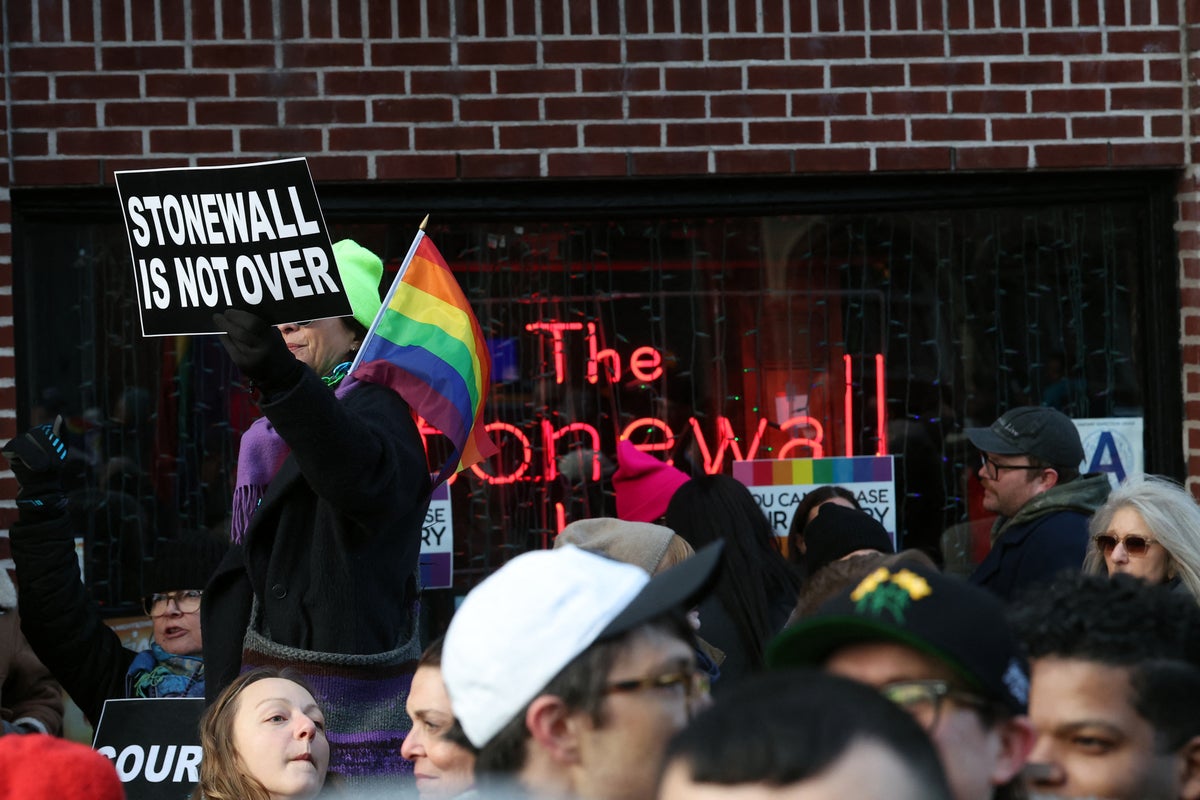
At the Stonewall National Monument, the flashpoint of the modern LGBTQ+ rights movement, the threat does not come from a wrecking ball. It comes from administrative editing. Following recent federal policy shifts regarding diversity initiatives, official educational materials and digital assets associated with the site have seen extensive revisions, including the removal of specific references to transgender history. Earlier, the iconic rainbow Pride flag was briefly stripped from its flagpole before being reinstated after public pushback.
A similar bureaucratic silencing occurred at the President’s House Site in Philadelphia, where exhibits dedicated to the lives of nine enslaved individuals held by George Washington were abruptly dismantled.
When a government removes the narrative context of a landmark, it effectively kills the site without destroying a single brick. Visitors are left with a hollowed-out husk of a building, stripped of the very history that made it significant.
The Submissions on the 2026 List
The National Trust took the unprecedented step of issuing a $25,000 grant to every single site on the endangered list. This financial injection is a direct response to a massive funding deficit facing public and private preservation efforts.
| Site | Location | Primary Threat | Historical Significance |
|---|---|---|---|
| Stonewall National Monument | New York, NY | Political erasure, administrative alteration | Birthplace of modern LGBTQ+ rights movement |
| President's House Site | Philadelphia, PA | Removal of historical exhibits on slavery | Residence of Washington; housed enslaved laborers |
| Women's Rights National Historical Park | Seneca Falls, NY | $10 million deferred maintenance backlog | Site of the first Women's Rights Convention (1848) |
| Ben Moore Hotel | Montgomery, AL | Severe structural decay, local development | Civil Rights hub; Green Book refuge for Black travelers |
| Tule Lake Segregation Center | Modoc County, CA | Encroaching airfield development | Largest WWII Japanese-American imprisonment camp |
| Greater Chaco Cultural Landscape | Southwest Region | Proposed oil and gas leasing expansions | Ancestral homeland of the Pueblo and Hopi people |
| Angel Island Immigration Station | Tiburon, CA | Environmental decay, funding shortages | Major Pacific gateway; historical site of Asian detention |
| Detroit Association of Women's Clubs | Detroit, MI | Severe interior water damage from burst pipes | Early Black-owned civil rights and community center |
| Swansea Friends Meeting House | Somerset, MA | Structural instability, prolonged closure | 1701 Quaker refuge from religious persecution |
The Backlog of Despair
Money remains the structural flaw in the American preservation apparatus. Look closely at the Women’s Rights National Historical Park in Seneca Falls. The site faces a deferred maintenance backlog exceeding $10 million.
The National Park Service simply does not have the resources allocated to maintain these properties at a functional level. When a roof leaks at a site like the Detroit Association of Women’s Clubs, where a 2024 burst pipe forced a total shutdown, a grassroots nonprofit cannot simply cut a check for a six-figure restoration project. The building sits empty. The wood rots.
Private philanthropy rarely fills the gap for sites associated with minority history. Wealthy donors historically favor symphonies, art museums, and the preservation of elite estates. The spaces where working-class people, civil rights activists, and marginalized groups organized are frequently modest structures built from cheap materials. They degrade faster, and they cost more to maintain relative to their footprint.
Real Estate Pressure and the Open Market
The preservation crisis is also driven by real estate mechanics. Land value regularly outpaces historical value in expanding municipal areas.
The Ben Moore Hotel in Montgomery sits in the historic Centennial Hill neighborhood. It was once a safe haven for Black Americans during Jim Crow, hosting meetings between Dr. Martin Luther King Jr. and the Reverend Ralph Abernathy. Today, it stands vacant, a prime target for urban renewal projects that favor high-density residential developments over historic retention.
Further west, the Tule Lake Segregation Center in California tells the brutal story of Japanese-American internment during World War II. Out of an original 1,100-acre site, a mere 37 acres are legally protected. The remaining land faces a looming threat from a proposed airfield expansion project, including a massive fence line that would permanently alter the historical landscape.
Preservation ordinances are fragile barriers. Local zoning boards have the power to grant variances, and cash-strapped city councils are routinely tempted by the tax revenues promised by new commercial developments.
The Mirage of Federal Protection
A common misconception is that a National Monument designation guarantees safety. It does not.
National Monument status provides a line item in a federal budget, but that budget is subject to changing political priorities. When an administration alters land-use policies, even protected areas face exploitation. The Greater Chaco Cultural Landscape, spanning New Mexico, Colorado, Arizona, and Utah, is a sacred ancestral homeland for the Pueblo and Hopi peoples. Despite its profound cultural significance, a federal proposal aimed to open 336,451 acres surrounding Chaco Culture National Historical Park to oil and gas leasing.
This highlights the vulnerability of landscape preservation. You cannot fence off an ecosystem or an ancestral horizon. If a drilling rig sits just outside an arbitrary boundary line, the integrity of the historical site is broken.
The Economic Reality of Survival
Saving these sites requires a shift away from pure sentimentalism toward hard economic utility. A building that serves no current purpose will eventually be demolished.
Adaptive reuse is the single most effective tool available to modern preservationists, but it requires a level of capital that small community organizations rarely possess. Transforming a site like the Ben Moore Hotel back into a functional community hub or a functioning boutique lodging space requires millions in tax credits, municipal bonds, and private investments. The $25,000 grants provided by the National Trust are vital for immediate stabilization and public awareness campaigns, but they represent a fraction of the funding needed for long-term survival.
True preservation requires locking these structures into local economies so that their maintenance is funded by their ongoing use. Without dedicated municipal funding lines and statutory protections that insulate landmarks from shifting political whims, the physical ledger of American equality will continue to vanish from the map.